Table of Contents
Introduction
Do you know what won’t keep you employed? The skill that got you hired.
Right from schools, universities to companies, those who remembered more and repeated better were rewarded.
For decades, success has been about how much people know. With the advent of Artificial Intelligence, the world has changed. Just with a prompt, AI can fetch and explain any information it has stored.
Humans have spent centuries gaining and perfecting crystallised intelligence. Using the same, AI writes essays, articles, summarises, solves equations, and even generates reports in a matter of minutes.
Hence, the skill of memorising information or facts and following instructions is losing its value. The skill that will keep you employed is fluid intelligence and it is something AI can’t copy, yet.
In this article, we understand the two types of intelligence and learn how to develop fluid intelligence. Read on.
What is fluid intelligence?
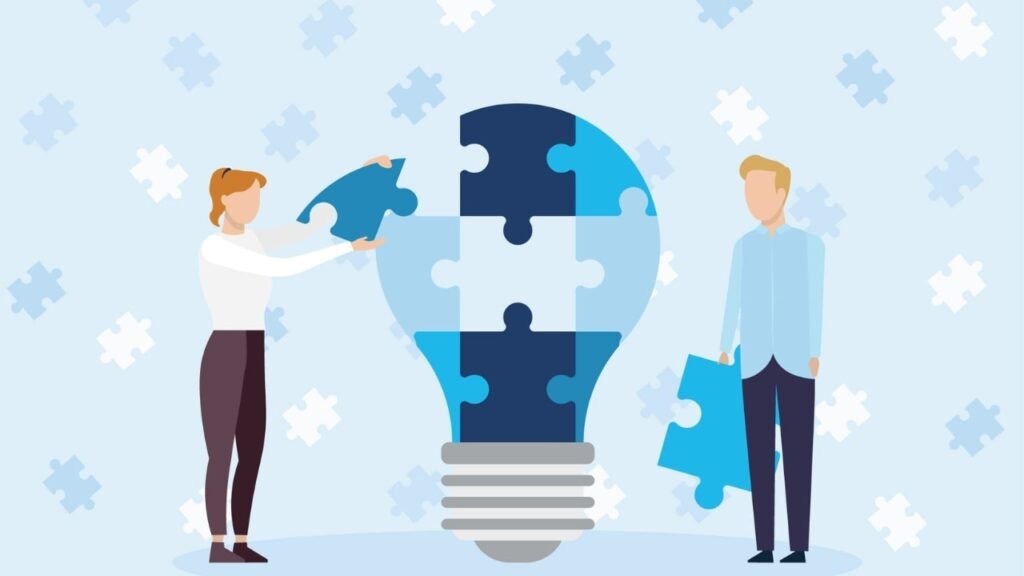
Fluid intelligence is like learning on the go.
It is about adapting, solving new problems, and thinking on your feet without any rulebook to guide you.
Think creativity, ability to reason, and connecting dots between things that may or may not go together.
This concept was introduced by Psychologist Raymond Cattell when he divided intelligence into:
- Fluid Intelligence: the ability to solve problems independent of previously acquired knowledge.
- Crystallised Intelligence: the knowledge gained from educational institutes, books, and experience.
While fluid intelligence helps you ask better questions, crystallised intelligence will help you answer the known questions.
Research states that fluid intelligence peaks in young adulthood. To maintain, nurture, and strengthen it, you require novelty, curiosity, and challenge.
How AI is replacing knowledge-based thinking?

By its very design, AI excels at and thrives on storing and then applying information. That is how it is able to answer all your questions.
And this is automated crystallised intelligence at work!
The Future of Jobs Report 2025 by World Economic Forum states that employers expect 39% of the key skills required in the job market to change by 2030. On an alarming note, jobs such as data entry and report writing that revolve around memorisation and repetition are already diminishing.
For the most part, if your value at work depends on what you know and can recall, you are up against something that can possibly know everything.
AI neither forgets, not does it sleep!
But it does struggle with fluid thinking that involves navigating ambiguity, understanding the context, and solving new problems. Therein lies your advantage.
The trap of crystallised intelligence

The education systems are failing graduates and that is the actual problem.
The education system in India and other parts of the world continues to encourage and reward learning by rote or rote memory over real understanding.
To get better grades, the proven formula for students is to memorise the entire textbook word by word. In such an environment, questions, debates, or experiments are not likely to guarantee success.
As a result, we have created a whole generation of toppers who can provide learned answers, but not always built solutions. India has millions of graduates every year and many continue to struggle with employability.
Reports by India Skills and NASSCOM will tell you that the pain points of these fresh graduates are problem-solving, creative thinking, and communication. And these are the very hallmarks of fluid intelligence.
You know why this happens? Simply because the system does not train the students to think. It instructs them to recall and in the process, undermines their capability.
In the fluid vs crystallised intelligence race, the latter is winning. This is not an India only problem. This pattern can be seen in grade-prioritising Western universities and tests-dependent Asian schools.
It seems there is no difference between education and information. Simultaneously, AI is absorbing global knowledge and every available information faster. This means memorisation and rote learning can soon become obsolete.
The next generation doesn’t need information overload. In fact, considering how the job market is shaping, they will benefit from training in independent thinking, interpretation, and adaptability. These are the building blocks of fluid intelligence.
To help navigate the ever-changing real world, the need of the hour is to teach ‘how to think’ rather than ‘what to think.’
Rise of fluid skills in the future of work
These could be the most valuable skills as per the Future of Jobs Report 2025:
- Analytical thinking
- Creativity
- Resilience
- Flexibility
- Curiosity
As you know by now, these all denote fluid intelligence. This is why the future will belong to the ‘adaptive’ and not ‘informed.’
Furthermore, McKinsey’s data tells us the demand for creativity and complex problem-solving, that is, cognitive skills will increase by 19% by 2030 in the United States. At the same time, the basic knowledge work will decline.
Do you know who AI can’t replace? The people who have the ability to learn quickly and make sense of the unknown. Aka, the fluid thinkers.
What do leaders say about adaptability?
Come, let’s hear it from the big guns!
“If you take two people — one a know-it-all, the other a learn-it-all — the learn-it-all will always win.”
– Satya Nadella, CEO of Microsoft
“Now I want someone to be curious.
The number one thing we hire for now is propensity to learn.”
– Ginni Rometty, former IBM CEO
“Lifelong learning is no longer optional. It is an essential part of the new world of work.”
– Andrew Ng, AI pioneer
“Everything we teach should be different from machines. If we do not change the way we teach, thirty years from now we will be in trouble.”
– Jack Ma, Businessman and Philanthropist
Fluid intelligence vs crystallised intelligence. Which one do you think they pick?
Fluid intelligence vs crystallised intelligence
Here are few examples to understand the fluid intelligence psychology:
Software Development
While humans design and dictate the logic, AI writes code. The best engineers are learning new frameworks and focusing on solving problems that AI cannot even predict.
Customer Service
While the human agents handle queries with emotions, empathy and improvise as needed, bots manage FAQ with standard responses.
Medicine
While doctors analyse, interpret, make key decisions, and innovate, AI diagnoses based on the available information.
Education
AI may help understand or decode concepts, but it is the teachers who must encourage the students to think and analyse.
This means if the rules are changing, humans win. But if the rules are clear and fixed, AI can compete.
Can fluid intelligence be improved?
Absolutely.
And how?
Well, not by filling your brain with more facts.
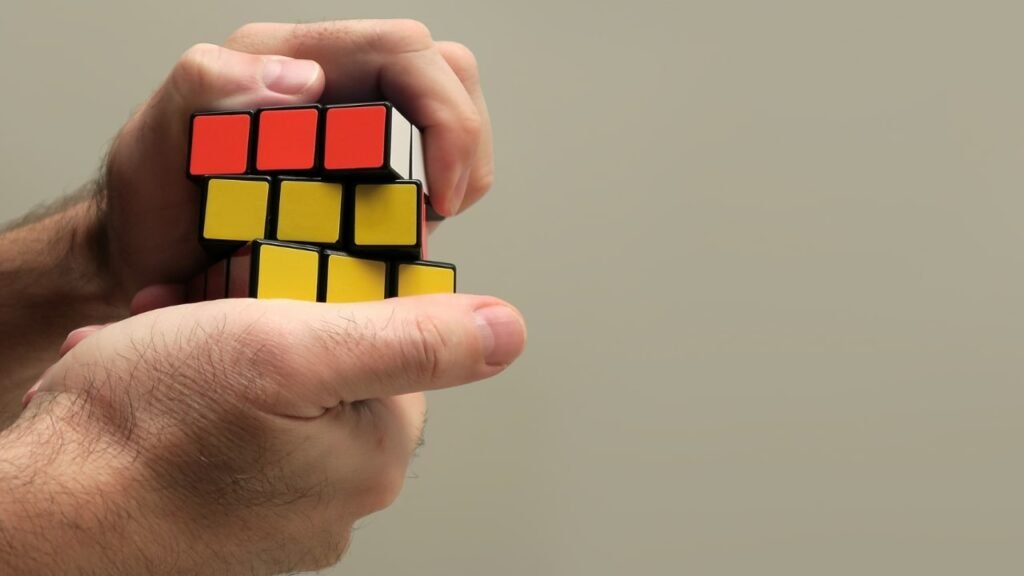
Fluid intelligence can be improved by challenging that brain of yours with novelty.
Various studies suggest that when people undertake unfamiliar, not-been-done-before, or mentally demanding activities, their fluid reasoning improves.
This means you can try learning a new skill, handling complex puzzles, and playing those strategy games.
Add to this, physical exercises that can support the cause by improving brain plasticity.
Like the muscles in your body, fluid intelligence grows through variety and resistance.
To build fluid intelligence, try this:
- First, stay curious!
- Solve new or complex problems and puzzles.
- Regularly learn something outside your comfort zone.
From knowledge to thinking
We are talking about a new kind of literacy. Even though less spoken about, the fluid intelligence psychology is prevalent enough. Take a look:
“Imagination is more important than knowledge. For knowledge is limited to all we now know and understand, while imagination embraces the entire world, and all there ever will be to know and understand.”
– Albert Einstein, Theoretical Physicist
“Education is the kindling of a flame, not the filling of a vessel.”
– Attributed to Socrates, Philosopher
“The illiterate of the 21st century will not be those who cannot read and write, but those who cannot learn, unlearn, and relearn.”
– Alvin Toffler, Writer, Futurist, and Businessman
All of them spoke about the revolution we are witnessing and living through. This is the age where ‘thinking’ will take precedence over ‘knowing.’
Now you know what matters.
Conclusion
Let us understand it right. Instead of looking at Artificial Intelligence as a threat, let us see it as a filter.
By harnessing crystallised intelligence, AI is filtering out those who only know. This means those who can think and harness fluid intelligence will have an edge.
In this rapidly evolving and advancing world we live in, your skills should not be all about memorisation. For memorisation can be taken over by automation.
To stay valuable at the workplace and adapt to the changing world, develop fluid intelligence. Start learning, operate outside your comfort zone, connect ideas, and think.
Yes, knowledge has become infinite. This only means that you have to go the fluid intelligence way and embrace the freedom that comes along.
The formula is straightforward. To stay employed, keep learning. To stay irreplaceable, keep thinking.
Recommended Articles
If you found this topic interesting, you might also enjoy reading these articles: