Table of Contents
Introduction
The unknown scientists.
Many unsung scientists of India behind brilliant inventions and discoveries are lost in history. Their contribution to modern science is forgotten before it was celebrated.
Upendranath Brahmachari saved millions from ‘kala-azar’ by developing a powerful drug to combat the deadly disease, one of the many unknown Indian scientists.
Shankar Abaji Bhise is responsible for 200 inventions and 40 patents, and Narinder Singh Kapany has over 100 patents for his revolutionary work.
In 1959, Dr Sambhu Nath De discovered the cholera toxin, which had a huge impact on global public health. Beyond medicine, G.D. Naidu created the first electric motor in India.
Through this article, we pay homage to Indian scientists’ inventions and explore some of their work that continues to influence the world.
Shankar Abaji Bhise (1867-1935)
“While India was known for success in science, literature, and the arts, it hadn’t contributed much to the world in terms of inventions. Shankar Abaji Bhise’s
work changed that perception, showing that India could also make significant contributions in the field of invention.”
- SciAstra, a science education platform analysing India’s contributions to global innovation
Despite 200 inventions and 40 patents, Shankar Abaji Bhise remains a forgotten inventor and an unknown scientist. Known as the ‘Indian Edison’ during his lifetime, his career spanned three continents. Yet, not many know about the contributions he made to science and technology.
Born in colonial Bombay, his scientific temperament was evident since childhood. At the age of 14, he built a small apparatus at home which produced coal gas. Though he did not receive a proper formal education, Bhise learnt by reading issues of Scientific American magazine. He once told a Brooklyn newspaper:
“I owe everything to the mechanical education I received from that American magazine.”
It was in his early twenties that he established a scientific club in Bombay. In addition, he also wrote for a Marathi science magazine called Vividh
Kala Prakash, making scientific principles accessible to people.
In the late 1890s, he won a competition by a British inventors’ journal that involved designing a grocery weighing machine.
The Bhisotype
Bhisotype was Shankar Abaji Bhise’s major contribution. A mechanical typecaster, the machine promised to revolutionise the global printing industry. Automatically, it could cast and assemble 1,200 different types per minute, much more than the European machines.
Engineers of Caston Type Foundry, a leading London firm, questioned his claims, and he responded by establishing his own foundry and demonstrating the capability of his machine.
Financial problems did prevent the Bhisotype from realising its commercial potential, but by 1914, he created a universal mould that suited all sizes of types. Bhise’s significant invention was acclaimed in printers’ journals in Britain and America.
Other notable inventions
Along with the printing industry, he is the brains behind numerous innovative devices:
- An electronic signboard that was exhibited at London’s Crystal Palace.
- An automatic toilet flusher and a telephone.
- A bust-improving device, like an early push-up bra, was patented in 1905.
- Kitchen gadgets and a device for curing headaches.
Vertoscope, an advertising machine, could display multiple colored advertisements that changed rapidly at intervals. It was also developed by him in 1901.
Why did he fade into obscurity?
“Unfortunately, Hyndman’s promise to raise £15,000 for the Bhisotype never panned out, and while awaiting this funding process to pan out, Bhisey
rejected an offer from the Linotype Company, a printing industry giant, to purchase a controlling share in his company.”
- The Better India, an Indian journalism platform documenting business history
Several factors contributed to his obscurity. First, he was unwilling to sell the Bhisotype to Linotype Company. He had to return to India after his financial backers, including Dadabhai Naoroji and Henry Hyndman, ran out of funds by 1908.
Shapurji Saklatwala managed Tata’s London operations. During World War I, he closed down Bhise’s syndicate and sold the machinery that was used to manufacture Bhisotype.
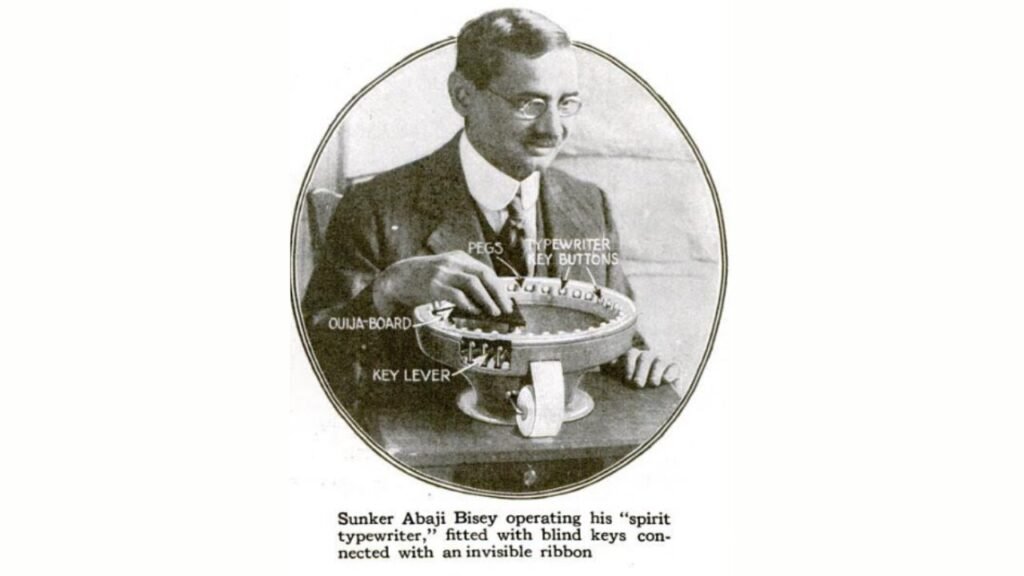
Later in America, when the psychic Edgar Cayce endorsed an iodine solution, Bhisey did taste some success. However, in the following years, he took an interest in the occult when he developed a ‘spirit typewriter,’ something like an upgraded Ouija board.
To sum up, this ‘interesting’ shift, along with his inability to commercially position and market his inventions, led to his disappearance in the chapters of scientific history.
Anna Mani (1918-2001)
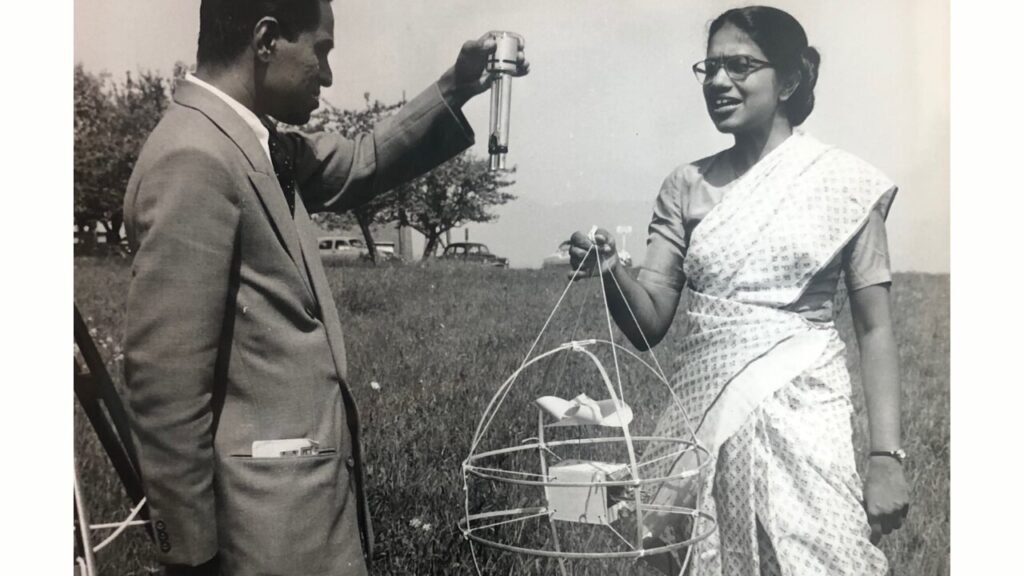
Born in Travancore, physicist and meteorologist Anna Mani is remembered as ‘The Weather Woman of India.
Overcoming obstacles in all shapes and sizes, she became the Deputy Director-General of the India Meteorological Department (IMD). Her contributions changed how India measured the weather patterns.
Breaking gender barriers in science
Unsurprisingly, she was growing up in an era when higher education for women was rare. At that time, less than one per cent of Indian women were literate.
Yet, she graduated with a physics degree from Presidency College, Chennai. After that, she joined Nobel laureate C.V. Raman’s laboratory at the Indian Institute of Science in 1940.
She published not one, but five papers on the spectroscopy of diamonds and rubies. Despite this, she was denied a PhD due to not having a master’s degree. But that did not stop her progress.
Standardising meteorological instruments
In 1948, she joined the IMD and, within five years, was heading a division of 121 men. She then standardised the drawings for nearly 100 different weather instruments and started their production.
Above all, she insisted on precision. She was known to conduct surprise inspections at midnight, with her dog for company. Once, she said in an interview-
“I believe that wrong measurements are worse than no measurements at all.”
Pioneering solar and wind energy research
In 1957, she established a network of stations to measure solar radiation. In doing so, she laid down the groundwork for India’s future solar energy programs.
Mani developed pyranometers and sunshine recorders that were capable of withstanding India’s humidity and heat. Under her supervision, in 1964, IMD launched India’s first ozonesonde balloon. A worthy addition to the list of Indian scientists’ inventions, it made her a member of the International Ozone Association.
Legacy in renewable energy
Mani retired in 1976 and continued her scientific pursuits. She authored two definitive reference books:
- The Handbook for Solar Radiation Data for India (1980)
- Solar Radiation over India (1981)
She also set up a small company in Bangalore to manufacture instruments for measuring wind speed and solar energy. A pioneer, Mani started advocating for renewable energy and documenting atmospheric changes decades before climate change concerns became mainstream.
Narinder Singh Kapany (1926 – 2020)
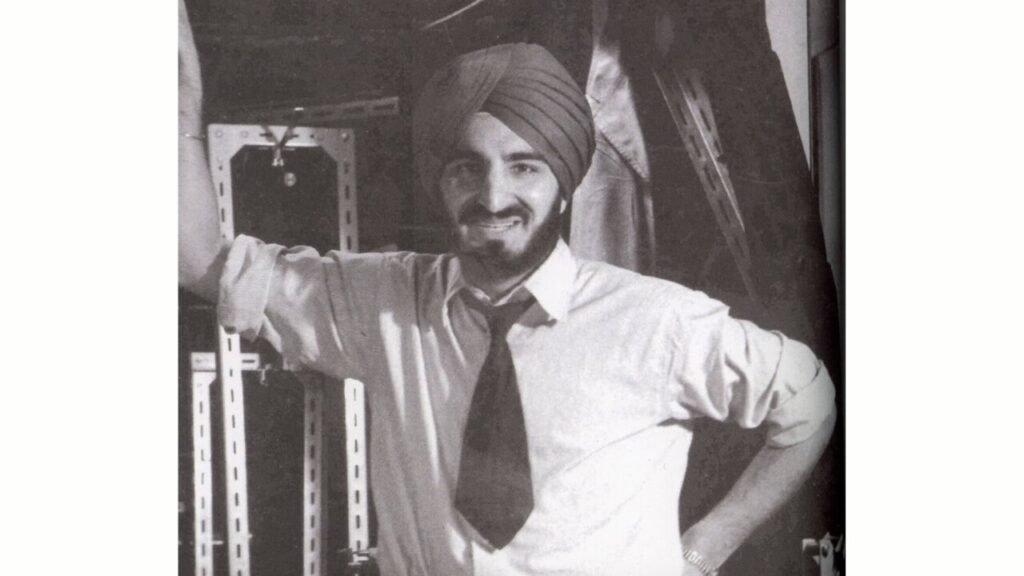
Known as the Father of Fibre Optics, this brilliant yet relatively unknown scientist and physicist was born in Punjab.
Since his high school days in Dehradun, he has been curious about bending light. Later on, Kapany would challenge the convention by asking whether light must travel only in straight lines.
Coining the term ‘fibre optics’
In 1953, he worked alongside Harold Hopkins at Imperial College in London. There, he achieved a breakthrough by transmitting high-quality images through fibre bundles.
While his interest was primarily centred on medical applications, it was in 1955 that he realised the true potential of this technology. In 1960, he officially coined the term ‘fibre optics’ in his landmark American article. He explained:
“When light is directed into one end of a glass fibre, it will emerge at the other end.”
Kapany’s research included fibre-optics communications, lasers, biomedical instrumentation, solar energy, and pollution monitoring. Remarkably, his work enabled endoscopy, laser surgeries, and, recently, high-speed internet. Another of the Indian scientists’ inventions.
Overlooked by the Nobel Committee
In 2009, his foundation-laying contributions were overlooked when the Nobel Prize for fibre optics was given to Charles Kao. However, this unsung scientist of India was not unacknowledged.
Jeff Hecht, a scientific writer, mentions in his book, ‘City of Light: The Story of Fibre Optics’, that between 1955 and 1965, Kapany authored and co-authored 30% of papers published on fibre optics.
Entrepreneurial journey in Silicon Valley
In 1960, he established Optics Technology Inc. He became the first Sikh Indian to take a company public in Silicon Valley. In 1973, he founded Kaptron Inc. During his lifetime, he earned 100+ patents.
Dr Sambhu Nath De (1915-1985)
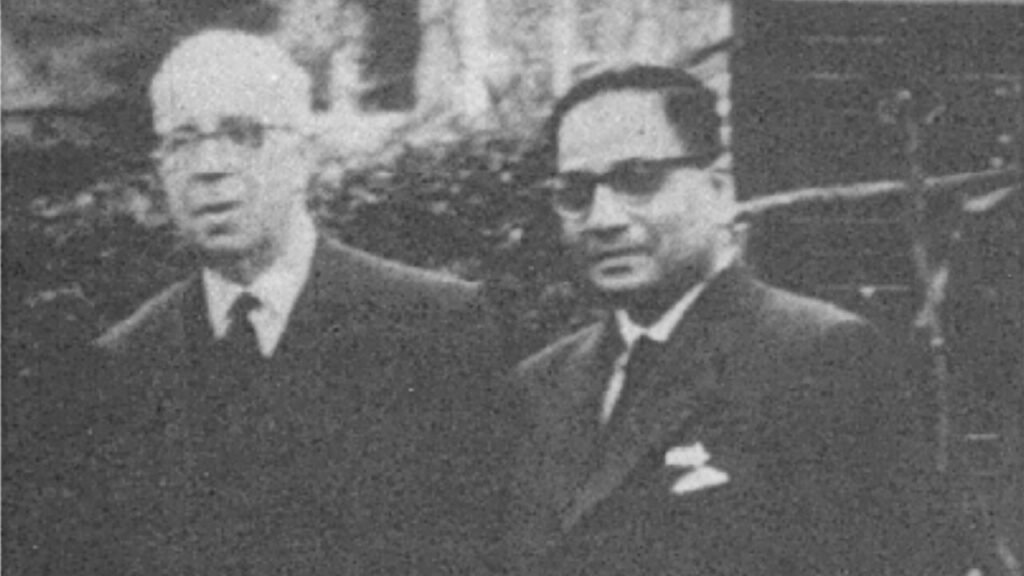
Meet the man who fought cholera.
The year is 1959. Inside a modest-looking lab in Calcutta, Dr Sambhu Nath De is working diligently with limited resources. He identified the real killer in cholera. No, it is not the Vibrio cholerae bacterium. In fact, it is the toxin it releases.
This discovery by the unknown scientist should have changed medical history forever.
Discovery of the Cholera Toxin
Dr De differed from his predecessors and took another approach to understanding cholera.
While researchers believed cholera pathogenesis was related to endotoxins, De stated that the causative agent affected intestinal permeability. With his pioneering rabbit ileal loop model, he replicated the disease and demonstrated it with bacteria-free culture filtrate of V. cholerae.
This groundbreaking experiment was published in Nature in 1959 and proved cholera’s exotoxin nature.
Impact on global public health
Spawning over 11,000 publications by 2009, his discovery became the cornerstone of modern cholera research. His work developed the oral rehydration therapy and saved millions of lives worldwide. As per Nobel Laureate Joshua Lederberg, it was ‘one of the most significant medical developments of the 20th century.’ Nobel Prize-winning Professor Lederberg also nominated Dr Sambhu Nath De for the Nobel Prize.
His work was ignored
This unsung scientist of India and his brilliance were not properly recognised in the country. In 1978, De himself said, ‘I have been dead since the early 1960s.’ Later, Professor Balaram noted:
“De died in 1985 unhonoured and unsung in India’s scientific circles… must rank as one of the most glaring omissions of our time.”
Reviving his legacy through documentaries
Better late than never!
Filmmakers have finally begun documenting Sambhu Nath De’s contributions. One documentary showcases his scientific journey through memories of family members and close associates.
This project turned into an archival effort. The team discovered the original manuscripts at his son’s house, which are being preserved there.
Conclusion
Many unknown scientists changed the course of history. The Indian scientists’ inventions did not make headlines, but we know that scientific genius does not always flourish in the spotlight.
With determination, they worked without chasing recognition. Bhise’s 200 inventions, Mani’s weather measurement standards, Kapany’s fibre optics, and Dr De’s life-saving cholera discovery have shaped the world. Without knowing their names, millions across the globe benefit from their inventions.
Their absence from the mainstream scientific discourse means that there is a gap in how scientific history gets recorded and celebrated. Be it gender discrimination, funding challenges, institutional barriers or colonial-era prejudices, they remained undefeated.
The fact that you are reading about them today proves that their legacy extends well beyond their lifetimes. They will inspire minds to seek knowledge for knowledge’s sake. The journey of unsung scientists of India affirms that science can overcome historical erasure.
High-speed internet, modern weather forecasting, disease treatments, and countless other technologies owe their origins to these unknown Indian scientists. Here’s to the shapers of our modern world.
Key Takeaways about the unknown scientists
Significant inventions by the Indian unsung scientists have laid the foundation for other scientific research and made our lives easier.
• Shankar Abaji Bhise earned 200 inventions and 40 patents. He created the revolutionary Bhisotype, a printing machine that could cast 1,200 types per minute. It challenged the existing European machines.
• Anna Mani, the Deputy Director-General of the India Meteorological Department, standardised nearly 100 weather instruments. She pioneered India’s solar energy research and became the first woman to lead 121 men in Meteorology.
• Narinder Singh Kapany coined the term ‘fibre optics.’ He holds over 100 patents for technology that enables modern high-speed internet and medical procedures like endoscopy.
• Dr Sambhu Nath De’s discovery of cholera toxin saved millions of lives. His works directly led to the development of oral rehydration therapy. He was nominated for the Nobel Prize.
These scientists battled their respective obstacles, such as colonial prejudices, gender barriers, and funding challenges. Their collective legacy tells us that scientific genius is beyond institutional recognition.
Guided by innate curiosity, a problem-solving approach, and dedication to scientific truth, these innovators paved the way for the technology-driven world we live in.
Recommended Articles
If you found this topic interesting, you might also enjoy reading these articles: